

Aldo Leopold, 1947, writing after the unveiling of a statue dedicated to the memory of the last Wisconsin passenger pigeon, shot in September 1899
Trees still live who in their youth were shaken by a living wind.
But a decade hence, only the oldest oaks will remember, and at long last only the hills will know.
There will always be pigeons in books and in museums – but these are effigies and images, dead to all hardships and to all delights.
Book pigeons cannot dive out of a cloud to make the deer run for cover, or clap their wings in thunderous applause at mast-laden woods.
Book pigeons cannot breakfast on new-mown wheat in Minnesota, and dine on blueberries in Canada.
They know no urge of seasons, no kiss of sun, no lash of wind and weather.
They live forever by not living at all.

Etta Wilson, resident of Petosky, Michigan, and eye witness to the events in the woods there in May 1878
Day and night the horrible business continues. Bird lime covers everything and lies deep on the ground. Pots burning sulphur vomit their lethal fumes here and there, suffocating the birds.
Gnomes in the forms of men wearing old, tattered clothing, heads covered with burlap and feet encased in rubber boots, go about with sticks and clubs knocking down the birds’ nests, while others are chopping down trees and breaking off the over-laden limbs to gather the squabs.
Pigs have been let loose in the colony to fatten on the fallen birds, and they add their squeals to the general clamour when stepped on or kicked out of the way.
All the while, the high, cackling notes of the terrified pigeons, a bit husky and hesitant as though short of breath, combine into a peculiar roar unlike any other known sound, which can be heard at least a mile away.
Of the countless thousands of birds bruised, broken and fallen, comparatively few can be salvaged — yet wagon-loads are being driven out in an almost unbroken procession, leaving the ground still covered with living, dying, dead and rotting birds. An inferno where the pigeons had builded their Eden.

1857 Ohio State Senate Select Committee report
The Passenger Pigeon needs no protection. Wonderfully prolific, having the vast forests of the North as its breeding grounds, traveling hundreds of miles in search of food, it is here today and elsewhere tomorrow, and no ordinary destruction can lessen them, or be missed from the myriads that are yearly produced.
Their vast principality spread from ocean to ocean, from snowy mountains in the north to desert in the south, with birds perfectly adapted for every space.
Once upon a time
An old story tells of a commonwealth of birds, where there were countless different birds of all shapes, sizes, temperaments, appetites. Their vast principality spread from ocean to ocean, from snowy mountains in the north to desert in the south, with birds perfectly adapted for every space.
Wandering the seas and coasts were loons, grebes, albatrosses, fulmars, shearwaters, storm petrels, tropicbirds, pelicans, boobies, gannets, cormorants, darters, frigates, jaegers, gulls, terns, skimmers and auks. Diving in the lakes and bays were herons, bitterns, storks, ibises, spoonbills, flamingos, swans, geese and ducks. Birds of prey roamed the skies: kites, hawks, eagles, harriers, osprey, caracaras, falcons and vultures.
Grouse, ptarmigan, quails and turkeys nested on the heaths and uplands, while cranes, limpkins, rails and gallinules dwelt in the marshes. Coots, oystercatchers, stilts, avocets, plovers, sandpipers and phalaropes trod the shores. Owls and nightjars hunted in the dark. Parrots showed off their dazzling plumage. Cuckoos laid their eggs in others’ nests. Kingfishers, woodpeckers, tyrant flycatchers, larks, swallows, jays, magpies, crows, titmice and nuthatches ate caterpillars in the forests and meadows. Dippers, wrens, mockingbirds, thrashers, thrushes, gnatcatchers, kinglets, pipits, waxwings, and shrikes all sang their hearts out. Vireos and warblers were known as the sprites of the woodlands. Meadowlarks, blackbirds, orioles, tanagers and finches lived in jubilant flocks. Swifts, hummingbirds and pigeons were superb aerialists.
Eventually, humans arrived too. The birds watched them, and saw how they hunted, how they sang songs, how they raised their children. A conference was called, to see what should be done. After long deliberation, the birds decided to welcome the humans to their kingdom, and discussed who should offer what gift. The Carolina parakeets and the Ivory-billed woodpeckers offered their plumage. The Bachman’s warblers offered their songs. Great auks offered their soft down and their glistening fat. And then the birds looked around to see who would offer themselves as food. All eyes fell on the passenger pigeons, of whom there were so many. And the passenger pigeons said yes, there are enough of us: some of us will offer our bodies to the humans as food, to make them welcome, to share our beautiful world with them.
So a single white passenger pigeon flew down from the conference to a Seneca camp by the side of the Allegheny River. She landed on the shoulder of the oldest person there, and told him what the birds had decided. I don’t know what he said in reply.
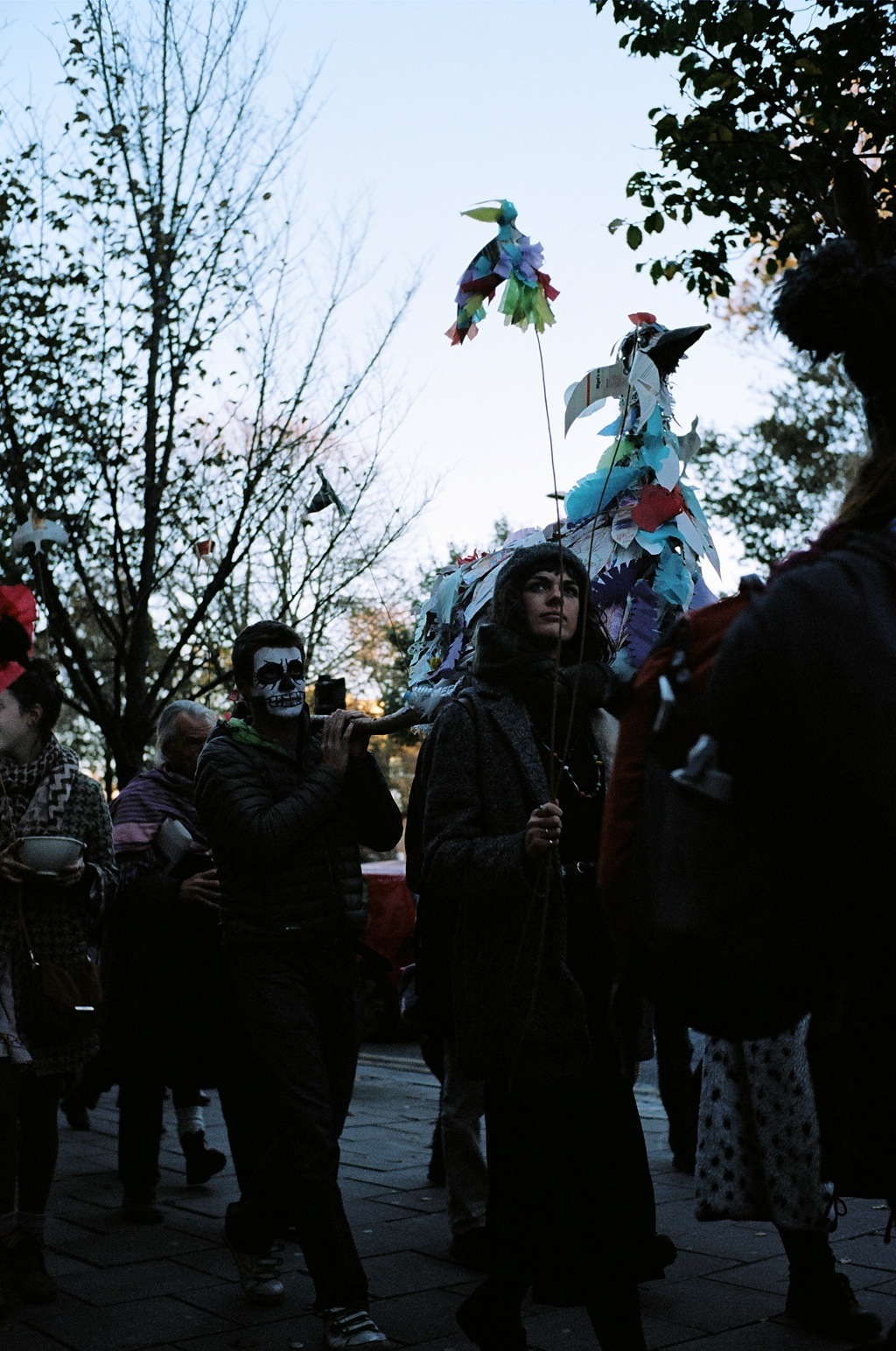
November 30th is the International Remembrance Day for Lost Species. Hold your own extinction memorial event, or just light a candle, in memory of the three species lost to eternity every hour. Find out more about Lost Species Day here.
To mark ONCA’s closure and there will be a farewell event, ‘Lost Species Day with Feral Theatre: Water and Air’, on 7th December in Brighton. The ritual will focus on the elements of water and air. It will include a walk to the sea’s edge, fire and shared food. It will also be an opportunity to gather together at ONCA Gallery before it closes permanently at the end of this year. Further details can be found here.
The names of the birds are taken from Audubon’s Birds of America, 1827, contents page.
With thanks to Mark Avery’s Message from Martha (Bloomsbury).
Dark Mountain: Issue 26 – Dark Ocean
Our Autumn 2024 issue is a full-colour exploration of the world's oceans in an era of collapse – in narrative, verse, art and photography.
Read more


