

Tonight is the peak of the meteor shower and hot light scatters across the bitter wind. Several weeks of searching have made for eyes attuned to irregularity, good for stargazing. Among the glittering cosmos they trim now to a single red light – the blink of a surveillance drone that follows the ship through the night.
In March 2019 the European Union declared the migration crisis over and suspended rescue efforts in the Central Mediterranean. The humanitarian emergency hadn’t ceased, but a state of exception had stripped human life of value to a point where it could be abandoned. Salt water became a space of coercion, resistance and struggle over life itself.
A fleet of search-and-rescue ships, sailboats and aircraft run by charities now patrols a stretch of water where almost 30,000 people have vanished since 2014. We look for the rubber boats, wooden boats, metal boats, all of them unstable and ill-equipped, in a condition of distress the moment they leave the beaches.
The EU border agency Frontex still operates planes and drones to monitor the area. The civil fleet is increasingly restricted and criminalised as it enacts the basic obligation of international maritime law – the duty to render assistance to any person in danger of being lost at sea.
Morning glares through binoculars. The ship heaves through its search pattern and a sharp watch is held for dark flecks flashing between waves. A small white search plane circles low, tips its wings in unity before flying ahead. A position arrives by email from the emergency hotline that relays distress cases to the civil fleet. Small boat, number of persons unknown, condition unknown. With engines at full capacity we are six hours out.
Between vigilant watches I rest my eyes on near things – lucid dusk of a wave crest, metallic blue of a flying fish. They skim the water on paper wings, sunlight bursting them to silver flames. A gilt of dust softens the horizon, swept up from the desert where twice as many people are thought to perish as on the sea. Water and sand have been made complicit in the use of power, tools of violence.
Water and sand have been made complicit in the use of power, tools of violence.
Shortly before noon a grey patrol boat appears alongside, close enough that I can see through its darkened windows. It passes twice in the coming hours. The distress call has rippled across radio waves to The Libyan Coastguard and they provoke our ship as it lumbers to the rescue. They are fast and armed with Kalashnikovs, guns for hire in a bidding war between Europe and the smugglers. Whoever pays more settles the fate of people in tiny boats. I watch them with salt-tired eyes as we race to the distress case.
The European Court of Human rights has determined that refugees cannot be returned to Libya where their lives might be in danger. To circumvent this ruling the EU has been funding the Libyan Coastguard and providing it with vessels to intercept migrant boats and enforce pullbacks to Libyan shores. The vessels are run largely by militias with records of human rights abuse. In this terrible campaign we are each the other’s adversary.
The Libyan patrol boat is waiting on scene, hostile profile set against low light. The people are already gone – taken, not rescued. Disappeared into the bowels of a metal boat. We will never see them. They will be sent to prison, tortured on videos used to extort their families. I have met boys with burn marks and knife scars who say they would rather die once at sea than a thousand times in Libya.
An investigation in 2014 found that migrants were being held in cages in Tripoli’s zoo. In 2018 a Somali refugee set himself on fire in Triq al Sikka detention centre, where a protest the following year led to twenty-two people being taken underground and tortured. Financed with dirty euros, these prisons exist to deter people from crossing to Europe, intensifying a situation in Libya that many already describe as a hellhole. The sea is the only choice.
They waited until our ship was on the horizon. Our team peels off in two fast rescue boats and approaches the scene. From our low vantage point there is confusion and then everything is clear, the small wooden boat obscured alongside the Libyans. Engines gone, probably sold back to smugglers. Nobody in sight. Later we will inspect the wreck to find blankets and flipflops and water bottles. Empty crisp packets and toilet rolls, a miniature toolkit you might keep in the kitchen drawer. Nothing sentimental.
We move slowly, vigilant, maintaining clear escape routes. The Libyan Coastguard have fired on the civil fleet before. It is a cat and mouse game for them. We are in each other’s line of sight all day without any contact, tension rising between us. We are in a contest for people’s fates, and it’s sickening to be a part of.
The patrol boat makes its move. Thick black smoke plumes as it turns sharply towards the two small rescue boats. It bears down hard, rearing up behind a white spray of salt water. Evasive manoeuvres are enacted and the rescue boats retreat at full speed, while the patrol boat tries to get between us. I instruct the boats to stay close – separation is our defeat. The ship has been circling the area and moves in to provide cover, but the grey patrol boat breaks off the chase. They have had their fun and withdraw to the haze. I do not know where any of us gained the right to do this.
Wind comes down from the north and the sea turns black. Our ship rides for the heavens, then pitches into the chasmic yawn. The monstrous anchor thumps against the hull, tolling the shudder of each deathly wave. Sixty-one people are lost to the whim of the storm without a trace. Their deaths are assigned to water, granted agency only when it provides a moral alibi for murder. We could not reach them in time and it is devastating.
*
I am on the upper deck searching for boats. A pigeon flusters and hunches there against the gasping aftermath of the storm. It is grey and purple with beady red eyes, it is exhausted. A plastic green ring on its right leg marks it as a racing bird, highly prized so long as they are useful, abandoned when they become too weak or injured to race. Racing pigeons are trained in North Africa and Southern Europe and lack basic survival skills. They are not conditioned for the open sea.
The pigeon’s feathers are damp, it stays a few hours and then disappears. On a training exercise a robin skitters through the air as our rescue boat glides on the running sea. It is found dead on the main deck of the ship. Songbirds are not made for this.

Migratory birds are the chorus of a borderless world. They often rest on ships and small islands during the crossing between Africa and Europe, a journey exploited by hunters who string out nets and nylon to tangle and ensnare, setting cages and lathering glue on tree branches. Many are endangered and protected by conservation laws but the illegal killing is overlooked by complicit bureaucrats and over 25 million birds are slaughtered each year.
In a political entanglement of border regimes, killing is normalised through cruel systems crafted by indifference.
Many birds are kept alive and smuggled abroad as pets or live decoys for trapping. In double-floored trucks and jacket linings they die from overheating, suffocation, and radiation from security scanners. If found by authorities they are released as wild animals or killed as a threat to native species. They exist in a state of exception, small enough to flicker between liberty and extermination under a mode of law that simultaneously abandons and binds living beings to itself. In a political entanglement of border regimes, killing is normalised through cruel systems crafted by indifference.
*
Seagulls haunt fishing boats beyond the international boundary with Tunisian waters. Dolphins chase trawl nets and a skein of fumes hangs above the fleet. Our ship weaves slowly between and flying fish skit bright from green water ahead of us. A yellow-moon-tailed tuna leaps to take one. It is a feeding frenzy and everyone wants a piece of life for themselves.
A stacked mirage lingers on the horizon, stretching and reversing itself in a phenomenon of heat and light that paints evaporative illusions on the air. Boats are heaped into the sky. The lookouts spot a sliver of people in the haze and alarm bells ring throughout the ship. Teams assemble at their stations and the rescue boats are launched. We hurry across the veneer.
The small metal boat is welded from heavy scraps, leaking water that laps on its low sides and sinks over two kilometres beneath it. Knee deep in a toxic mixture of salt water and petrol, the people bale with a white plastic bucket. A seagull perches on flotsam nearby and a glossy slick trails the boat. Inflated inner-tubes are stacked at one end which rises sharply skyward; the other end weighted down by a single outboard engine. The smallest wave would tear it to the bottom of the sea.

When I am sure everyone has received a lifejacket, we take the children. With each person that steps carefully aboard the rescue boat, the metal sarcophagus rises from the water. We transfer around forty people to the ship. The father of the first child to be rescued stays until the end, operating a small mechanical pump. He tells me later that his family boarded the craft with a one in twenty chance of survival. Paper boats have better luck than this.
The passage to Italy takes a few days. Food and blankets are distributed and there is time to rest in simple bunk beds. When they arrive, the people will be taken by authorities, photographed and loaded into buses with numbers stapled to their clothes, documented and set adrift into the asylum system. There will be armed police and border agents in dark glasses and low caps and the ship will be scrutinised by customs officials. The smallest discrepancy will be leveraged to stop us going back to sea.
Aboard the rescue ship everyone gets flip flops, there are books and haircuts and daily meetings about human rights. For some the ship is a brief respite and a sense of relief sweeps across its decks. People lean over the side to watch the dolphins and the flying fish. A mobile phone plays Arab pop music and a small cluster gathers round. Then people are dancing. The celebration runs in waves and the music is lost to the clapping and tapping and singing. This is resistance and it holds for a moment as the ship tracks lightly beneath a deep sky and land comes into sight.
MAIN IMAGE:
Max Gruff
36 Views from Binoculars
A series of digital photographs taken while I sailed the Hebrides with Sail Britain in 2018. I meant to take photos during the trip on an old 35mm camera but I dropped it on the first day and damaged it. The work evolved organically, taking trial and error iPhone pictures through binoculars. The photos that came reminded me of the early photographs of Canada I had seen taken by Hudson Bay explorers.
Max Gruff is a graduate of the Royal College of Art. His work is intuitive and incorporates mistakes and imperfections into itself. ‘I no more know why I make what I make than the guitar knows why it plays what it plays. I am drawn to loss and worlds erasing worlds and beauty that cannot be extinguished.’
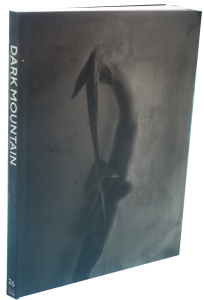
Dark Mountain: Issue 26 – Dark Ocean
Our Autumn 2024 issue is a full-colour exploration of the world's oceans in an era of collapse – in narrative, verse, art and photography.
Read more


