

There Showed a Tree
There is a tree. It stands near my house. It has stood there for years. I pass by it every day. Today it showed up.
So today I saw the tree. It stands by the wayside but today it showed itself. A forlorn-looking mound of earth sits in its shade. I go back seven decades when, under the dense foliage of a shahtoot and four sheesham trees, was a small well a little outside the childhood village. The well’s waters stay in me as do the foliage and shade. On the forlorn mound sit drowsily four dogs of unoccupied freedom just as we did under the trees. Two are barking half-heartedly, without a purpose, providing themselves amusement in the day’s dull heat. It is too hot and wearisome to run around and play. The third is a half yelp, like a disinterested agreement with the half-hearted barks. As though the yelp just happened to be as happened to be the disinterest and agreement; like the whiff of wind that just happened to turn a curve, or the pebble that just happened to lie on the ground. Generations of humans and desolation just happened to be as did the village of a shahtoot and four sheesham trees some decades ago; but still continue to stay in me. There is a fulsome yawn after the dog’s half yelp and its ears go back as do my seventy years; for life and love happen in a yawn when wakefulness is and is not. When there cohabit inertia and bovineness. The preoccupied neither yawn nor love; nor do those wanting to be somewhere other than themselves. The town is of the preoccupied; desolation is of the inert and poised. There is a veeran buried under this town. Dogs know this; so do the mound and the tree. The fourth sits quietly like the sage. It is like the tree that stands above the mound or those at the small well whose waters stay in me.
Today I saw the tree. It stands like the spoilt idler. It must have stood similarly that day when the earth was small and humans lived in the outside; as humans and animals of Abujhmad still do. Or like the mound atop which sit four idling dogs; or the shahtoot and sheesham that still caress me.
It must have stood similarly that day when the earth was small and humans lived in the outside; as humans and animals of Abujhmad still do
It is not possible to live without forgetfulness and sleep. Landscapes and cultures too need sleep. Our past has been of sleep, restfulness and poise. Those that do not sleep are doomed to impairment. For, then is caused language, society, friendship and the State. These are of continuous and eternal vigilance and wakefulness, of recitation and remembrance. They are of the striving and toiling; of those that are everywhere but at themselves. Such are the homeless victims and carriers of the State. Such are their towns and cities buried under which lie the vast vacant veerans.
Today I saw the tree. Its desolation forges a temper, a svabhav, of delicate absences and dissolutions; the dissolution of sums and totals in a world contingent upon ceaseless activity and growth. Desolation forges a disposition to live without a vocabulary of speech and speed, of the one and many of mathematics.
More than the ‘thing’, the ‘nothing’ was integral to life. Life ought not be full and inhabited. Footprints ought to be small. The veeran lived in every nook and crevice. It lived in the absence of activity and aspiration. Much happened in absence, like life’s liveliness and vitality. Spaces were earmarked in houses and neighbourhoods for the nothing and veeran to be.
There was the reti, the stretch of sand dunes, in my childhood village. It lay at the edge of lush green agricultural fields and stretched a kilometre or two. How the mounds of sands came to be right next to well-irrigated and fertile lands, one does not know. But it was next to our fields with their small well and trees of foliage and shade. We saw them every day, the reti, the well and the trees. Whereas the reti beckoned, none dared go. The reti was infertile and without any beneficial use, but it was allowed to be. It lent us the pull of vacancy. On its small mounds of sands grew bulrush, extreme solitude and silences. Several generations had lived without stepping into the reti. Village dogs that ran the three or so kilometres to harass the monkeys at Bangla on the Big Canal, skirted its sides. Even the robber chose the sugarcane fields to hide in instead of the secluded reti.
These are what crafted the village, its svabhav, vocabulary and speech of every day. That is what its life was – of avoidances and evasions, of hiding and seeking. Of the incontrovertibly implicit. Like that of a sage. Like the dogs atop the forlorn mound. It was the absence of aspiration, inclination and transgression. That is how it was.

‘What Are You Nothing About’
My five years in Abujhmad were of ‘limbo and self-neglect’. After leaving the region and coming to the adjoining villages of Bastar, a good many more years went by in the same way.
Compared to Abujhmad, it was easier to speak about the rest of Bastar. It shares, in some measure, the baggage of the world outside – human society, profit economy, industriousness, poverty, globalisation, ecology, pedagogy, notions of justice, violence, conservation, health and nutrition, facts and figures – and all the familiar phraseology that goes with them.
Abujhmad seemed like a mystical metaphor for something removed and away. There seemed something indefinite about the region, as though without a narrative or phraseology. It was not of the definite, discussions or debates.
Whenever I returned to Delhi, I could not speak of Abujhmad freely with friends and acquaintances; nor could I talk about it in the seminars and conferences on adivasis, forests and ecology. Inert and inactive, in limbo and neglect, my understandings and observations about the region stayed within me, churning. I lacked that ‘something’ to talk. This problem would, however, disappear when I returned to Bastar. Though the Pilsus, Jalis, Tondes, Astus, Agnus and the rest were ‘backward’ and of ‘un-vigorous’ minds, they resonated deep with Abujhmad, sometimes down to the finest detail even though they had never been there. Such is the magic of contiguity of landscapes even though diminishing. With them I could frequently go into delicate detail with ease. They had only a little of the logical and rational. Nature does not allow for more. More is mischief. Slowly, however, I began telling, mostly as little stories, some details of Abujhmad to my daughter Kunalika when she was small.
The Pilsus, Mandavis, Tondes, Astus, and Agnus sensed Abujhmad’s wilds quite vividly. After all, the name (Abujhmad – ‘inscrutable land’) itself was given by them and their likes. No other name could have been more expressive. They could understand that the wilds are not only inaccessible and formidable vegetation, hills, large anthills, caves, tigers, bears and leopards, wild rivers and streams; they are also such that the counting of only up to five makes profound sense as do facial expressions, and much nakedness. It is a region without sin, of non-doing people living comfortably without livelihood, starvation or violence. Pilsus, Mandavis, Tondes, Astus, and Agnus ‘knew’ instinctively that without these there can be neither Nature nor human survival.

The illiterate people of noble souls could understand how these induce a way of being of a million nuances that sustain a healthy life and healthy earth; how night and its primeval darkness are much more alive and powerful than days. It was easy to talk to them about how humans ought to neither think nor know, and that a good life ought to be animal-like. Or that home is in the outside. In their own ways, they would add to these from their own experiences, understanding and hearsay.
It was not difficult to say in their presence that Abujhmad is mostly a cadence, and that cadence can be articulated only in the nebulous and unexpressed; and that Abujhmad’s nebulous may not be captured, fixed and reduced to data, latitudes and longitudes.
While we talked, the distinctions of the factual and anecdotal, objective and subjective, real and unreal collapsed. Our conversations became like stories, going into many directions and to many realms back and forth, unencumbered by purpose, understanding or knowledge. They became of fluidity. I could not have such conversations with the scholars, mystics, ascetics or holy men I had met or stayed with sometimes in other places. The Pilsus, Mandavis, Tondes, Astus, and Agnus were the ignorant and uninformed friends who had nothing to contribute to earth. Theirs were such small presences that for them nothing had to be contributed to, explained or understood. Living was not mortgaged to intent or aspiration. I knew they are a rapidly diminishing people.
Occasionally my daughter and one or two friends in Delhi would ask me why I did not write about the region.
Abujhmad provided the material but, paradoxically, it itself was not material
Abujhmad provided the material but, paradoxically, it itself was not material. The first few months there and the freshness of the place gave my ignorance that which encourages material writing. In the freshness that comes from a lack of experience, my faculties were in full swing. Ignorance as such does not need ability or sense. It is enough by itself. Slowly the months and years passed and I found myself exactly where I was – not writing. Now there was neither the material nor the ability. I still had the latitudes and longitudes; and the data, facts and figures could be talked of, analysed or added to. But like an advertisement hoarding, they were shrill, gross and deficient; masculinely announcing themselves. Except for the few field notes taken in the initial few months, I could not write. It became worse when language became suspect – it could neither comprehend nor communicate the metaphorical and the nebulous. Dialect came in handy but I did not know it well enough. Also, dialect is not inclined to writing; it is less about humans and their affairs and more about landscapes and cadences.
Somehow, writing this chapter, I am reminded of a person in Sadhana village, about sixty kilometres from Pune on the way to Kolvan. He was of a differently abled mind. I had met him a few times in the summer of 2014–15. In the course of our conversations, he had once asked me, ‘What are you nothing about?’ I could not answer. I still do not know what he meant to ask. But the question haunts me to this day.
All Said and Done
Quite incapable of a career or earning a livelihood, I have lived with much time at hand. Despite what is disparagingly called ‘unemployment’ or ‘under-employment’, my body and soul have stayed reasonably together. There were family, social and economic pressures, at times severe, but somehow earning a livelihood could not find an important place in the scheme of things. It was not out of some heroic idealism. Suffice it to say I have found myself unequal to doing many things in the life lived over the past seven decades. I am, un-embarrassingly, made that way and have not been in much conflict with it. Even when badly needed, it was well-nigh impossible to go contrary to my make up. After returning for good from Bastar in 2013, writing and doing small jobs here and there is about all that I have done. In Bastar, even this was not done. Till about four or five years ago, there was occasional project work on adivasi issues, some editing or translation work now and then, delivering a short talk in a university, institute or elsewhere or assisting in organising a conference or two on themes far removed from my interests. Whereas earlier there was much travel, gradually it became occasional. From these sometimes came some money, sometimes not.
Over the years, there has been the almost unfailing afternoon nap and sleep by ten at night.
But all that is now no more. No more are there the invitations to talks. I liked delivering them, especially when they involved students and other youngsters. Invitations stopped because maybe the talks did not communicate much. Now there are minor household chores. They take away some of my time, but I do not mind. For the rest of the day, I am left with myself. In the evenings, I take to walking through Shahberi’s large plains or its dusty winding lanes; or have a cup of tea at a shack facing large green agricultural fields. The fields have scarecrows and a handful of thatch huts with goats at the other end. Or I meet the cobbler, barber, utensil-seller, tailor or the maulana. As mentioned elsewhere, the maulana is ever disinterested in running his small tea shack and his bearing shuns the customers. It is his disinterest and aloofness from customers that I find the most endearing. Else, I go past the temple where sits for alms the old monkey man with his two mischievous simians. Stopping by for a small conversation, I give the primates some money to buy two bananas. Sometime ago, the monkey man had only one monkey with him. I enquired of the other.
‘He has gone to our native village.’
‘Gone to native village?’
‘Yes.’
‘What takes him there?’
‘He has work.’
‘He has work?’
‘Yes.’
‘When does he return?’
‘When the work is over… maybe in a few days.’
I was not sure whether he was talking of the monkey, some relative or a son. Or whether it is the way of talking about animals with whom one has lived for long. I did not have the heart to enquire what business had taken the monkey to his native village about seventy kilometres away or how it travelled or with whom.

People used to suggest I ought to be realistic in life. They would often ask ‘How will you live?’ I did not know then, and I do not know now. In the meantime, a good fifty years or more have gone by. There have been the highs and lows a human is subjected to. I do not have a dislike for realistic living. But I have always felt that I am realistic enough. When it comes to important matters I, usually, do not quarrel with the gut. It was a fairly early feeling that living a lesser life is living a more realistic one.
How language changes its tempers! Till even fifty years ago, there was not the word ‘livelihood’ in our vocabulary. In north India, it was called guzaara (etymologically meaning a sense of passage). The usual question used to be, ‘Guzaara kaise chal raha hai’ (How is the passage going)?
Ambitions or aspirations are always larger than one, else they cannot be. They do not exist in reality but are creations of the larger social mind. Ever since they have come, their promise to help exceed oneself has been enticing, even compelling. Being unambitious or unaspiring is not a heavy demand on oneself or another; projected realism is. Giving much, if not all, of oneself to something that is not one’s own – own size, own little worth – or is of an external value is severely unrealistic. After all, the purpose of livelihood, if one were to determine it, should be no more than a healthy togetherness of body and soul. Such togetherness remains even when there is no livelihood. Living must be reduced to its basic ordinariness – something we have been fighting against with an extraordinariness.
When one is born are also born one’s time and space. One does not come so empty-handed as is usually said. For a simple and healthy life, one needs all the time and space created for one. Unless kept empty, they do not remain themselves, but are mediated and intervened. One crowds them and oneself with much that is extraneous – some of which, if not most, is rubbish. That is what the times want to take ownership of – time and space intrinsically given to one – and deliver the congesting traffics of growth and transaction. We need all our intrinsic time and space to do little or nothing.
Writing would not have been possible for me were it not for the less work and much time. The ‘less’ would not have been possible. Less is what happens in abundant time. It needs more time. Writing may not be the best thing I do but it is the least thing I do; although it is my heartfelt wish to do still less of such little.
Living on the edge, staying away, is not an abnegation of realism but the very substance of it. Each moment life lives at the edge. It knows better.
Republished by kind permission of HarperCollins India
 For many indigenous peoples, land and the landscape are like religion. Theirs are not structured, efficient communities; nor are such considered desirable. And while organised religions and various ‘isms’ have made their way to these remote domains, they have never been able to fully take root. The open spaces, communities and the wilderness that the adivasis call home have all been shrinking rapidly in recent times, however, and are in danger of being lost forever. Narendra’s new book provides a valuable, fascinating insight into this vanishing realm.
Landscapes of Wilderness (HarperCollins India, 2024) draws upon Narendra’s conversations, observations and ethnographic notes made during his stay with the adivasis in Abujhmad and Bastar over thirty-three years, and his deep association with his childhood village in the plains of north India. Rooted in popular adivasi narratives that are invariably indeterminate and captivating, it evokes the colloquial grandeur of adivasi folk discourse and idiom, and a nativity that is intrinsically comfortable with itself-an echo of the surrounding landscape.
Vivid, compassionate, and a testament to the author’s love for these lands and their people, Landscapes of Wilderness is a heartwarming, thought-provoking book that will appeal to anyone who is interested in the abiding relationships human beings have with nature.
You can order a copy of the book here.
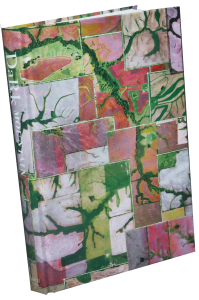
Dark Mountain: Issue 25
Our Spring 2024 issue is an anthology of non-fiction, fiction, poetry, interviews and artwork inspired by the struggle for land rights, and by the living land itself.
Read more


